House of the Dragon Season 3 Burns Bright in Tumbleton
House of the Dragon Season 3 finale features the Tumbleton battle with Addam of Hull and Ulf's dragonfire turning the tide.
 ·
Aug 11, 2026
·
4 min read
·
Aug 11, 2026
·
4 min readThe Season 3 finale of HBO’s House of the Dragon arrives like a dragon landing on a crowded street: spectacular, chaotic, and impossible to look away from, even when the destruction feels gratuitous.
After years of a prequel struggling to justify its existence, showrunner Ryan Condal and his writers have delivered the show’s strongest, most sustained run of television, capped by a finale that swings for the fences even when it clips its own wings.
A Finale That Refuses to Be One
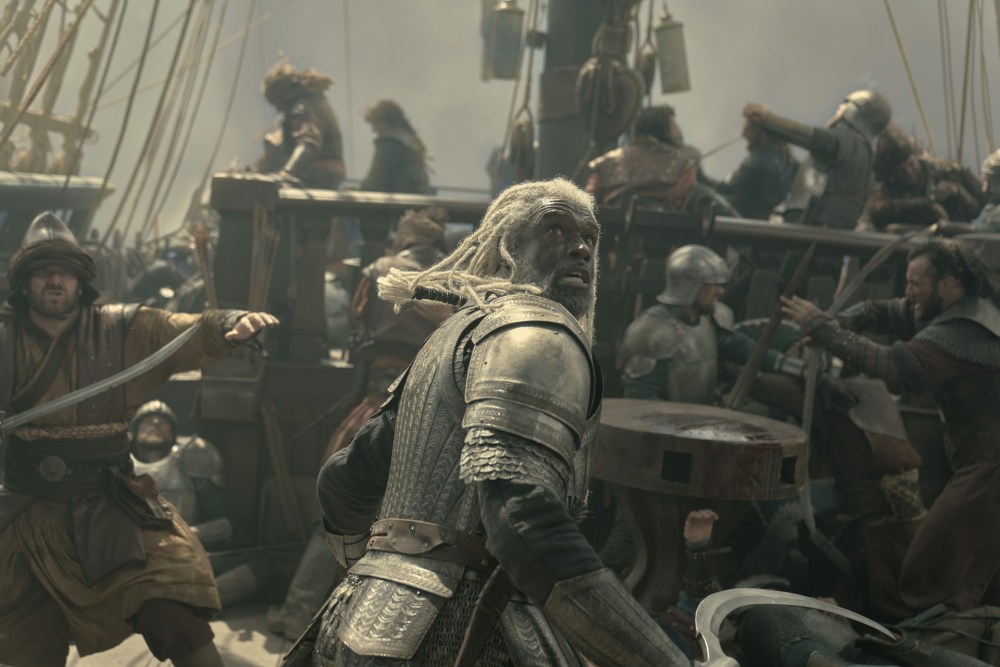
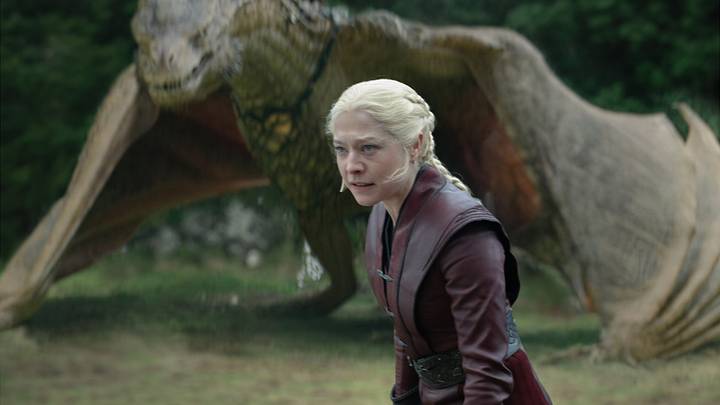
“The Traitors of Tumbleton” operates less as an ending than a detonation. The Tumbleton battle, with Addam of Hull on Seasmoke and Ulf’s belated, decisive dragonfire turning the tide, is the kind of large-scale staging the series has promised since its first dragon took flight.
The action choreography finally matches the weight of the material, and director Clare Kilner handles the aerial and ground-level chaos with a confidence that earlier seasons often lacked.
When the flames die down, though, several major character fates dangle in midair, and the episode’s refusal to resolve them feels less like bold storytelling than a deferral of dramatic obligations.
Emma D’Arcy’s Slow-Motion Collapse
Rhaenyra’s arc this season, spiraling from a grieving mother into a woman who orders the Sept’s slaughter and delivers a blood-soaked public speech, is the season’s most ambitious and most exposed gambit.
Emma D’Arcy plays the unraveling with extraordinary precision, conveying a queen who has confused divine mandate with raw vengeance. The problem lies in the architecture. Her turn into religious zealotry arrives without the psychological groundwork to make it feel earned, leaving D’Arcy to carry motivation the writing never quite supplies.
The Sept massacre, explicitly echoing the Becket assassination, reads as a strategic own-goal so severe it strains credulity, and the episode asks us to accept it as tragic inevitability rather than poor decision-making.
Helaena’s Quiet Devastation
Where the Rhaenyra material falters in motivation, Phia Saban’s Helaena achieves something almost unbearable in its restraint. Her arc across Season 3, culminating in a final scene where she physically blocks the Tapestry in Rhaenyra’s presence, gives the season its emotional anchor.
Saban performs grief as a language, and her scenes achieve the kind of symbolic resonance the writers clearly intended for the broader season.
Tom Glynn-Carney’s Aegon, meanwhile, returns on Sunfyre with a swagger that recalls his Season 1 unpredictability, and the brotherly dynamic with Ewan Mitchell’s coiled, watchful Aemond provides some of the finale’s sharpest human friction.
Prophecy as Structural Rot
The prophecy subplot remains the show’s most persistent creative liability. What began as a hint of destiny has calcified into a crutch the writers reach for whenever character motivation runs dry.
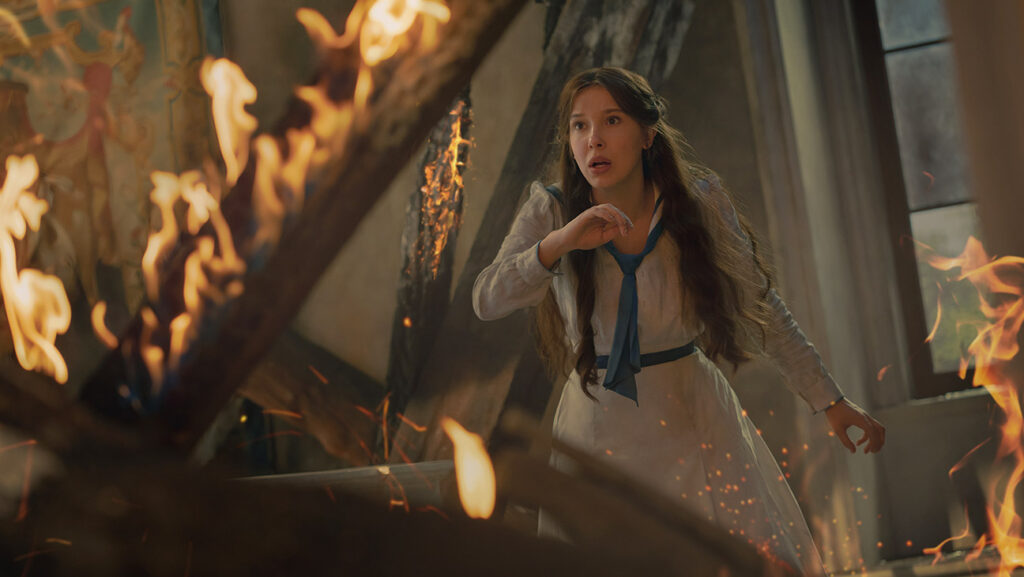
The Tapestry, a recurring visual device that should function as the season’s most elegant recurring motif, instead becomes a casualty of its own ambition, and the final shot of Helaena blocking it reads as a meta-commentary the writers may not have intended: the show itself, becoming unstable as it strains to contain its mythology.
Burning a tapestry while fire-breathing dragons circle overhead carries weight; the question is whether the show knows what to do with the ashes.
War’s Smallest Casualties
Abubakar Salim’s Alyn lands the fatal blow at Tumbleton, a narrative choice that quietly reflects the moral compromise the show has been building toward.
The decision to ground the war’s consequences in characters who were never born to royalty is the season’s most successful structural choice, and it pays off here. Abubakar Salim delivers the moment with the kind of weary efficiency that suggests a man who has stopped asking what victory costs.
These glimpses of the conflict from below the Targaryen ceiling are where House of the Dragon most convincingly argues that this civil war is a national catastrophe rather than a family spat with dragons.
Setup as Strategy
Season 3 will be remembered as the year the show remembered it was a war epic rather than a chess game.
The pacing choices, prioritizing action and momentum over expositional dialogue, mark a deliberate course correction, and the Henry II parallels woven into Rhaenyra’s arc give the political violence historical ballast.
Pacing stumbles in the finale’s reluctance to land its emotional punches, and the writing’s tendency to confuse intensity for purpose, still drag at the edges.
Condal’s team has built something genuinely improved, though, and a finale that leaves threads hanging is, on balance, a finale that trusts its audience to return. Whether Season 4 honors that trust depends on answers the burning Tapestry has not yet provided.