Leviticus Review: The Biblical Horror That Weaponizes Love and Fear
 ·
Jun 17, 2026
·Updated: Aug 21, 2026 ·
5 min read
·
Jun 17, 2026
·Updated: Aug 21, 2026 ·
5 min readOn paper, Leviticus presents all the familiar flavour of supernatural horror: a desperate exorcism, a aggressive entity, jump scares that arrive like clockwork and promise conventional thrills.
Yet this Australian debut quickly reveals itself to be less interested in demonic possession than in the human costs of religious persecution, using genre conventions to smuggle a devastating portrait of queer adolescence into the frame.
Set within the suffocating quiet of a conservative Australian town, the film centers on Naim and Ryan, two teenage boys conducting their romance in shadows and stolen moments. Their intimacy hides from a community that views their existence as moral aberration.
Their secret collapses when parents discover their relationship, prompting a violent religious intervention that backfires spectacularly and exposes the family’s true fears.
Instead of salvation, the ritual intended to “cure” them births a shapeshifting entity that assumes the form of its victims’ deepest longings. It transforms affection into something lethal and desire into a death sentence.
This premise weaponizes the very architecture of the exorcism genre against itself, subverting the traditional narrative of demonic corruption to examine how religious institutions themselves become the source of contamination.
By framing the supernatural event as a direct result of parental intervention rather than inherent sin, the film immediately establishes its critical stance toward doctrinal violence.
The creature operates as a particularly cruel metaphor for internalized homophobia—the monster wears the face of what you love most, forcing you to destroy yourself to survive.
Filmmaking choices externalize the violence of religious doctrine into physical form, interrogating how scripture becomes weaponized against those who dare to love outside prescribed boundaries. By literalizing conversion therapy’s psychological haunting, the supernatural element sharpens rather than softens the trauma’s edges.
The title itself functions as a thematic anchor, invoking the biblical book historically deployed to condemn homosexuality while simultaneously reclaiming that text as a space for horror, resistance, and queer reclamation.
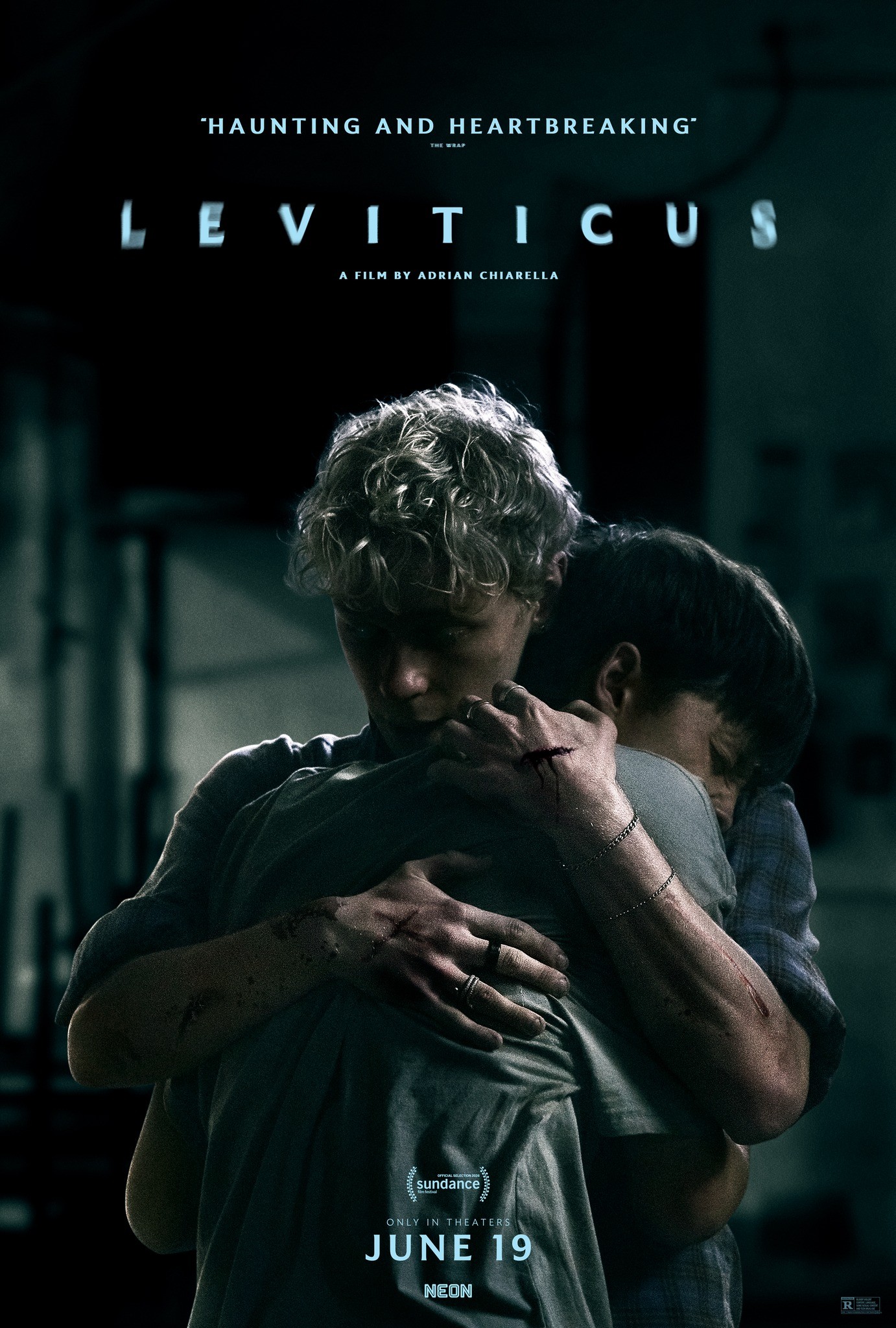
Joe Bird’s Quiet Revolution
Bird delivers Naim with a restraint that speaks volumes, communicating fear and longing through posture and silence rather than declarative dialogue. His performance avoids the theatricality often demanded of horror protagonists, instead grounding supernatural events in the specific gravity of a boy who has learned to make himself small.
Opposite him, Stacy Clausen matches this energy with a different register of vulnerability, creating a chemistry that feels authentically tentative and tender. Their connection carries the fragile urgency of first love conducted under surveillance.
The Geography of Oppression
Muted, desolate cinematography mirrors the emotional architecture of the town itself—vast skies that should suggest freedom instead press down like a lid. Visual choices avoid Gothic excess typical of religious horror, opting instead for sun-bleached realism that makes supernatural intrusions feel like violations of physics rather than atmosphere.
Sound design becomes crucial here, building dread through negative space and the absence of ambient comfort. In this community, silence itself functions as a form of complicity and empty spaces speak louder than sermons.
Creature design favors uncanny familiarity over grotesque spectacle, making the horror feel personal rather than cosmic when the entity manifests.
Jump scares arrive with mechanical precision but land with emotional weight, each supernatural event tethered to psychological realities that characters cannot escape. These moments remind viewers that the monster is simply an extension of the town’s existing violence.
Commitment to understatement occasionally tips into evasion, leaving certain character backstories frustratingly opaque. Ryan’s family history receives particular short shrift, with motivations that remain abstract rather than specific. Pacing in the second act drags, sacrificing momentum for mood in ways that test audience patience rather than deepening immersion.
Narrative threads regarding the town’s broader complicity in the boys’ suffering feel underdeveloped, hinting at systemic critique without fully articulating its mechanisms. Secondary characters occasionally register as archetypes rather than fully realized individuals, diminishing the sense of a lived-in community.
The Shape of Self-Loathing
Shapeshifting abilities represent the film’s most brilliant conceit, literalizing how religious trauma forces queer individuals to view their own affections as dangerous. This monster does not simply kill; it seduces, tempts, and mirrors, suggesting that the most damaging hauntings are those that wear our own faces.
By framing the creature as both antagonist and tragic mirror, the film complicates straightforward victimhood, exploring how oppression internalizes itself into self-destruction and guilt.
Leviticus succeeds by trusting its audience to read the metaphor without hand-holding, refusing to dilute its horror with redemptive platitudes or easy catharsis. Joining a recent wave of sophisticated Australian genre cinema, the feature uses rural isolation to explore national wounds around masculinity and conformity with unflinching honesty.
In transforming the exorcism film into a meditation on the violence of forced healing, the filmmakers have created something genuinely unsettling: a horror story where the real evil isn’t possession, but the cure itself.