Michael Review: A Star Turn Trapped in Biopic Routine
 ·
Apr 22, 2026
·Updated: Aug 21, 2026 ·
6 min read
·
Apr 22, 2026
·Updated: Aug 21, 2026 ·
6 min readMichael arrives with the kind of built-in fascination that can overwhelm almost any film: the first official biopic about one of pop music’s most scrutinized figures, and a performance by Jaafar Jackson that has to carry the burden of memory, imitation, and myth all at once.
That burden proves lighter on the screen than it sounds, though the film around him keeps slipping back into the safety of a familiar rise-and-fall template.
Jackson enters, and the room changes
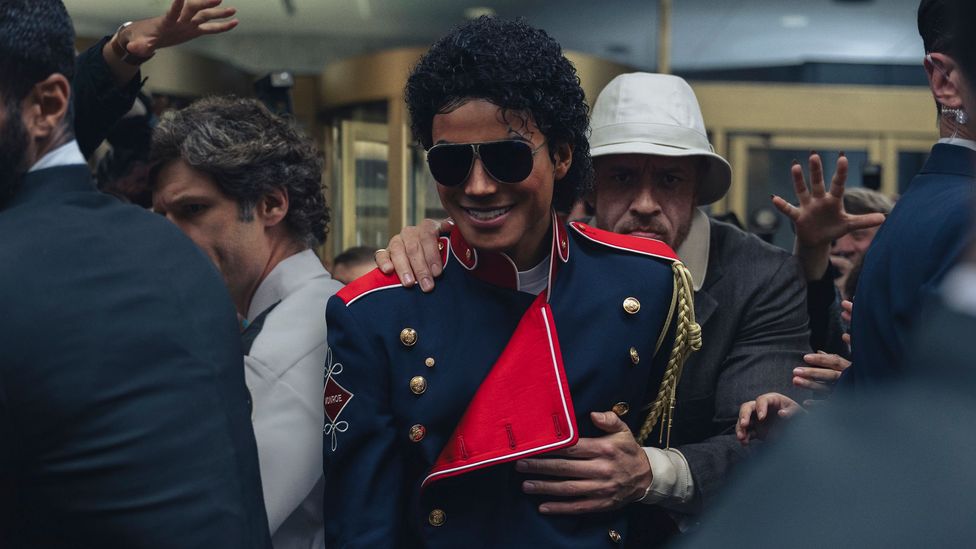
Jaafar Jackson’s performance is the reason the film keeps drawing breath.
He captures Michael Jackson’s physical precision, the soft-spoken cadence, and the sudden shifts in energy so well that the role stops feeling like a casting stunt within minutes; the illusion is strong enough to let the audience relax into the performance rather than measure it against the real person.
That matters, because so much of a biopic lives or dies on whether the lead actor can create the private weather behind a public icon, and Jaafar comes closer than the screenplay deserves.
He is also helped by the film’s careful recreation of performance spaces, especially the early Jackson 5 material and the solo numbers that announce Jackson’s transformation from prodigy to star.
The musical scenes have a charge that the surrounding drama often lacks, and the movie knows exactly when to get out of the way and let movement, costume, and choreography do the speaking.
In those moments, Michael briefly escapes the museum exhibit problem that traps so many prestige music biographies.
Colman Domingo owns the air
Colman Domingo’s Joe Jackson is the other force in the room, and the film becomes his in a way that is both advantageous and slightly revealing.
He gives Joe a hard-edged authority that avoids easy villainy, but the role also pulls the film toward confrontation whenever the script begins to thin out, which means several scenes feel designed less to clarify Michael than to give Domingo another sharp angle of pressure.
That is not a complaint about the performance; it is a sign of how much more alive the family conflict feels than the broader industry-and-legacy material surrounding it.
Those father-son exchanges supply the movie with its clearest emotional friction, because they hint at a childhood organized around discipline, ambition, and fear rather than simple inspiration.
The film understands that Jackson’s perfectionism did not appear out of nowhere, and the best dramatic beats suggest a boy learning to convert scrutiny into control.
Yet the script keeps circling those ideas instead of fully inhabiting them, so the human cost remains glimpsed rather than explored.
A familiar climb in polished shoes
Director Antoine Fuqua stages the rise with professional assurance, but the film’s structure rarely strays from the standard biopic staircase: childhood pressure, early success, solo breakthrough, public adoration, mounting complication.
That familiarity matters because Jackson’s life already seems to exist in public memory as a series of images, and the movie rarely finds a form that can challenge that image-heavy history with something more introspective or surprising.
Instead, it moves with the confidence of a project that knows viewers already understand the broad outline.
The pacing reflects that caution.
Each phase arrives cleanly, almost too cleanly, as if the movie fears that too much ambiguity would slow the songs, and the result is a rhythm that can feel dutiful during the connective tissue between set pieces.
When a biopic about an artist this singular starts feeling efficient rather than searching, the absence of risk becomes impossible to ignore.
Music as memory, not decoration
The recreations of Jackson’s most famous musical moments remain the film’s most persuasive argument for its existence.
They are staged with enough energy and precision to remind you how radical his performances were in the first place, and the movie wisely treats those sequences as emotional punctuation rather than mere highlights.
Even viewers who know every move can feel the power of seeing them reassembled in a theatrical frame.
Still, the film’s devotion to recreation can also work against it.
By leaning so heavily on iconic numbers and carefully arranged milestones, Michael sometimes feels more interested in preservation than revelation, and that keeps it from finding the emotional afterimage that separates a good imitation from a lasting portrait.
The music lands, but the scenes around it too often behave as connective tissue for the next tribute rather than as drama with its own pulse.
The person behind the icon
That lack of emotional depth is the film’s hardest limitation.
Michael Jackson’s life carried contradictions that cry out for cinematic pressure, genuine artistry alongside manufactured persona, private isolation beside global saturation, affection distorted by fame, and the movie acknowledges those tensions without pushing hard enough into them.
It leaves the audience with the shape of a legend and only partial access to the person inside it.
This is where the film’s broader theme, the problem of music biopics themselves, becomes hard to ignore.
These movies often promise access to the soul of an artist while relying on the same checklist of origin, ascent, crisis, and applause, and Michael sits squarely inside that contradiction.
It wants to honor Jackson’s myth while also explaining it, but the script keeps choosing the safer route, preserving the image even when the story would benefit from riskier, messier, more personal choices.
That does not leave the film empty, only limited by its own caution.
There is pleasure in the craft of imitation, in the way the performances recreate the electricity of Jackson’s public self, and in the way Jaafar Jackson turns resemblance into something approaching embodiment.
But the closer the movie gets to emotional truth, the more it retreats into structure, as if the filmmakers trusted the catalog more than the man.
Michael will likely satisfy viewers who come for the songs, the choreography, and the thrill of seeing an uncanny performer inhabit one of pop culture’s most recognizable figures.
For anyone hoping for a braver account of how stardom can consume identity, it lands as a polished but familiar chapter in the long history of music biopics, one that remembers the spectacle vividly and the inner life only in flashes.
Final Score: 7/10
A polished performance keeps this familiar biopic worth a look.