One Night Only Review: A Glossy Romcom Dystopia That Won’t Commit
In a near-future America where premarital sex is criminalized except during a government-sanctioned annual window, two strangers spend one chaotic night in New…
 ·
Aug 6, 2026
·Updated: Aug 10, 2026 ·
4 min read
·
Aug 6, 2026
·Updated: Aug 10, 2026 ·
4 min readThere’s a version of One Night Only that goes fully unhinged, and there’s a version that settles into genuine romantic sincerity.
Director Will Gluck has delivered something caught stubbornly between those two poles, a film that flirts with both satire and swooning but never quite plants its flag in either territory.
The premise practically dares you to dismiss it: in a near-future America where premarital sex is criminalized except during a government-sanctioned annual window, two strangers, Allie and Owen, spend one chaotic night navigating New York City in search of connection.
The opening text crawl does heavy explanatory lifting, spelling out the legal framework and cultural rules with all the subtlety of a legal brief. Within minutes, the film is already sprinting through its world with infectious energy.
Barbaro and Turner’s electric spark
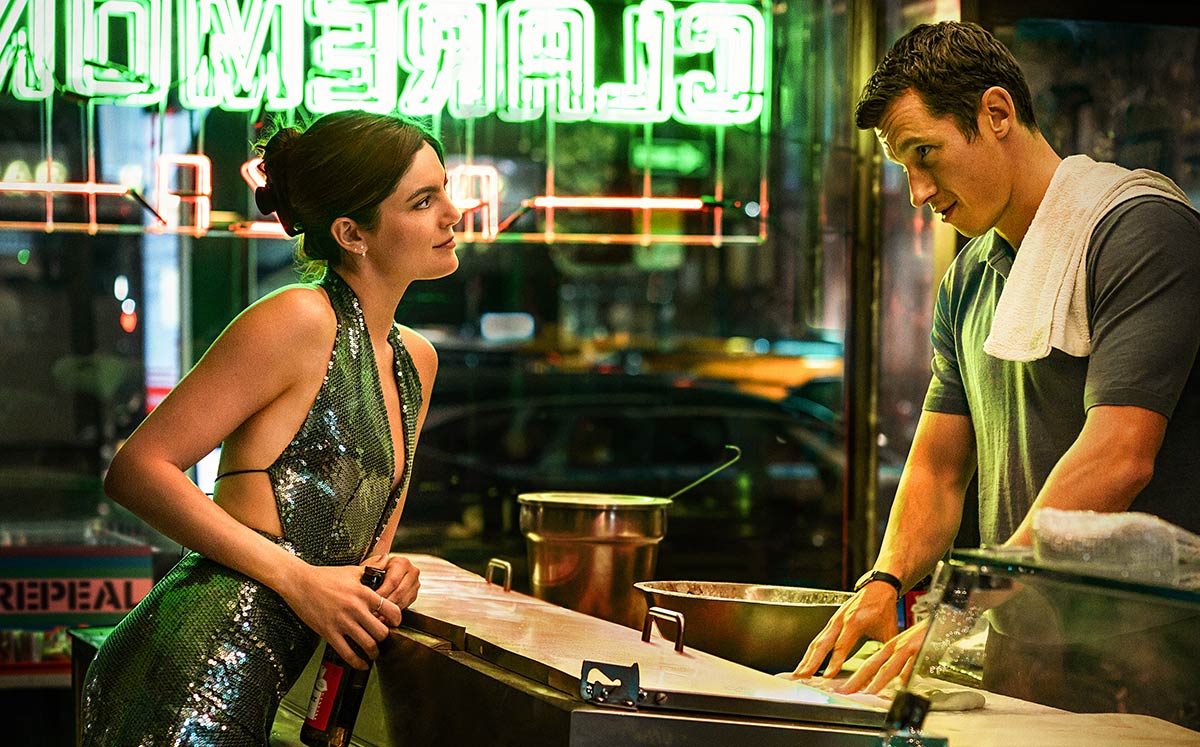
Monica Barbaro and Callum Turner carry the entire enterprise on their shoulders. Their chemistry is immediate, lived-in, and easy to root for. Barbaro plays Allie with a kind of guarded optimism, a woman who has clearly learned to game the system.
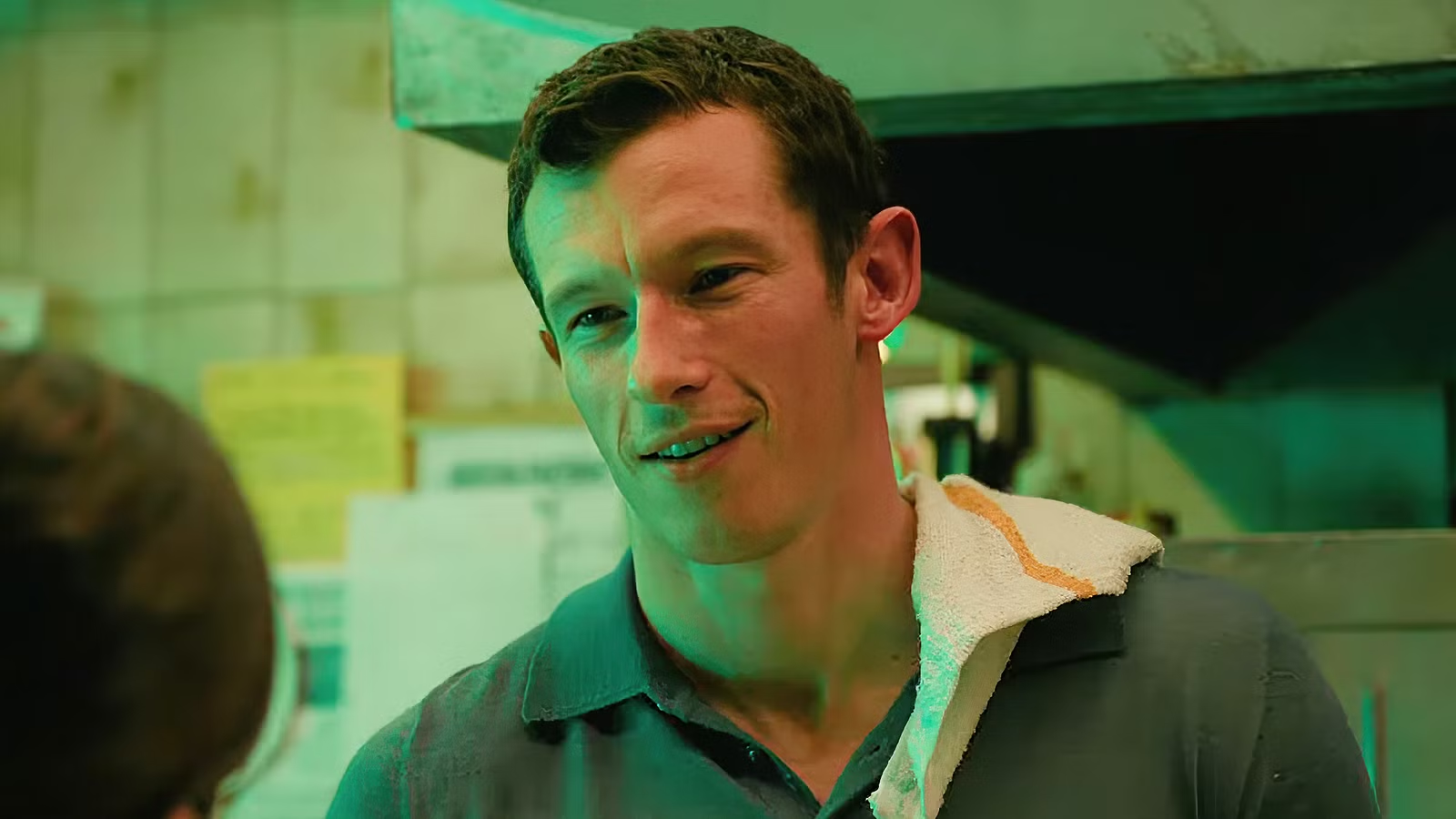
Turner brings a hangdog sincerity to Owen that grounds even the most absurd logistical hurdles they face.
Maya Hawke appears in a supporting role that generates real spark whenever she’s onscreen. Her character functions less as a fully realized person and more as a narrative accelerant, a voice pushing Allie toward choices she might not otherwise make.
The glossy dystopia problem
Visually, the production is immaculate. The New York City cinematography captures a city transformed by festival energy, neon-lit and packed with costumed revelers who treat this annual evening like a combination of Mardi Gras and Spring Break.
The costuming is sharp, the pacing zippy, and the Top 40 needle-drops arrive with a confidence that suggests someone in the editing room had strong opinions about tempo.
The glossy surface is genuinely pleasurable to inhabit. For a while, the sheer momentum carries you past the gaps in the worldbuilding. Those gaps, however, become harder to ignore as the night wears on. Who enforces this law? What happens to violators?
The film gestures toward vaguely authoritarian imagery, checkpoints, compliance officers, surveillance, but it never commits to the political implications of its own setup.
Romcom muscles, satirical nerves
The film is at its best when it leans into the logistical comedy of the premise: coordinating a hookup in a city where everyone is simultaneously hunting for the same thing leads to genuinely funny physical sequences.
There’s a chase through a department store that plays like a Buster Keaton short filtered through raunchy millennial humor.
But just as these set pieces land, the script pivots to sincere emotional beats that feel almost embarrassed by the absurdity surrounding them. Several incongruous celebrity cameos arrive at odd moments, functioning like winking asides to the audience that pull you out of the central relationship rather than enriching it.
What One Night Only is really about
Beneath the glitter and the score’s insistent optimism, the film is wrestling with something genuinely thorny: the idea that desire, when criminalized, becomes commodified. Characters discuss logistics the way people discuss stock options, and the resulting sex-as-real-estate framing could have been the spine of a sharp, biting satire.
There’s also a quiet argument running beneath the surface about bodily autonomy and government overreach, but it manifests mostly in aesthetic gestures, ominous broadcasts, stark signage, rather than in the characters’ lived experience. Owen and Allie don’t debate the ethics of the system. They just navigate it.
One Night Only succeeds as a curiosity, a glossy what-if that generates enough goodwill on the strength of its leads to coast past its structural indecision.
The two-hour-plus runtime does stretch patience, especially in the third act, where the tonal confusion stops feeling playful and starts feeling like a script that ran out of road.
For audiences looking for pure entertainment, the film delivers an energetic, charming ride with strong central performances and a handful of memorable set pieces. For viewers hoping the dystopian premise would fuel something with actual teeth, the film offers a candy-colored shrug.