Ice Cream Man Review: A Melted Mess of Splatter
A mute ice cream vendor turns children into violent killers in the horror film Ice Cream Man.
 ·
Aug 5, 2026
·Updated: Aug 10, 2026 ·
4 min read
·
Aug 5, 2026
·Updated: Aug 10, 2026 ·
4 min readThere’s something almost charming about a horror premise this brazenly silly: a mute, clown-faced ice cream vendor rolls into a sleepy suburb and starts turning children into pint-sized killing machines. Ice Cream Man commits fully to that hook, which is both its selling point and the precise reason it collapses under its own weight.
The setup, for the unfamiliar, is exactly as juvenile as it sounds. A sinister new vendor begins distributing frozen treats to the local kids, and before long, the children are undergoing grotesque transformations and hunting down the adults who once tucked them into bed.
Director Eli Roth, working from a script that feels cribbed from a stack of late-night VHS rentals, aims for a kind of sleazy, anything-goes horror throwback. The problem is that throwback only works when the filmmaker behind it has something to riff on beyond bloodlust.
Ari Millen’s Silent Menace
Millen deserves real credit for anchoring the film with a performance built almost entirely on physicality. His ice cream man never utters a syllable, yet he radiates an unsettling, predatory stillness that recalls the silent menace of classic slasher villains.
The 1950s soda jerk costume, garish face paint, and deliberate, almost mechanical movements transform him into something between a children’s entertainer and a nightmare.
In the film’s better moments, the camera lingers on Millen in wide shots, letting his stillness do the work that dialogue fails to manage elsewhere. Unfortunately, no one else in the cast is given the same opportunity to exist with any real texture.
Gore as Substitute for Dread
The practical effects work, I’ll grant, shows genuine craftsmanship in spots. A handful of kill sequences demonstrate real imagination, leaning into the absurdity of children committing acts of savagery with the kind of gleeful commitment that the rest of the film struggles to sustain.
Roth has always understood the appeal of transgression for its own sake, and there are stretches where his unapologetic grossness achieves a midnight-movie energy that almost works.
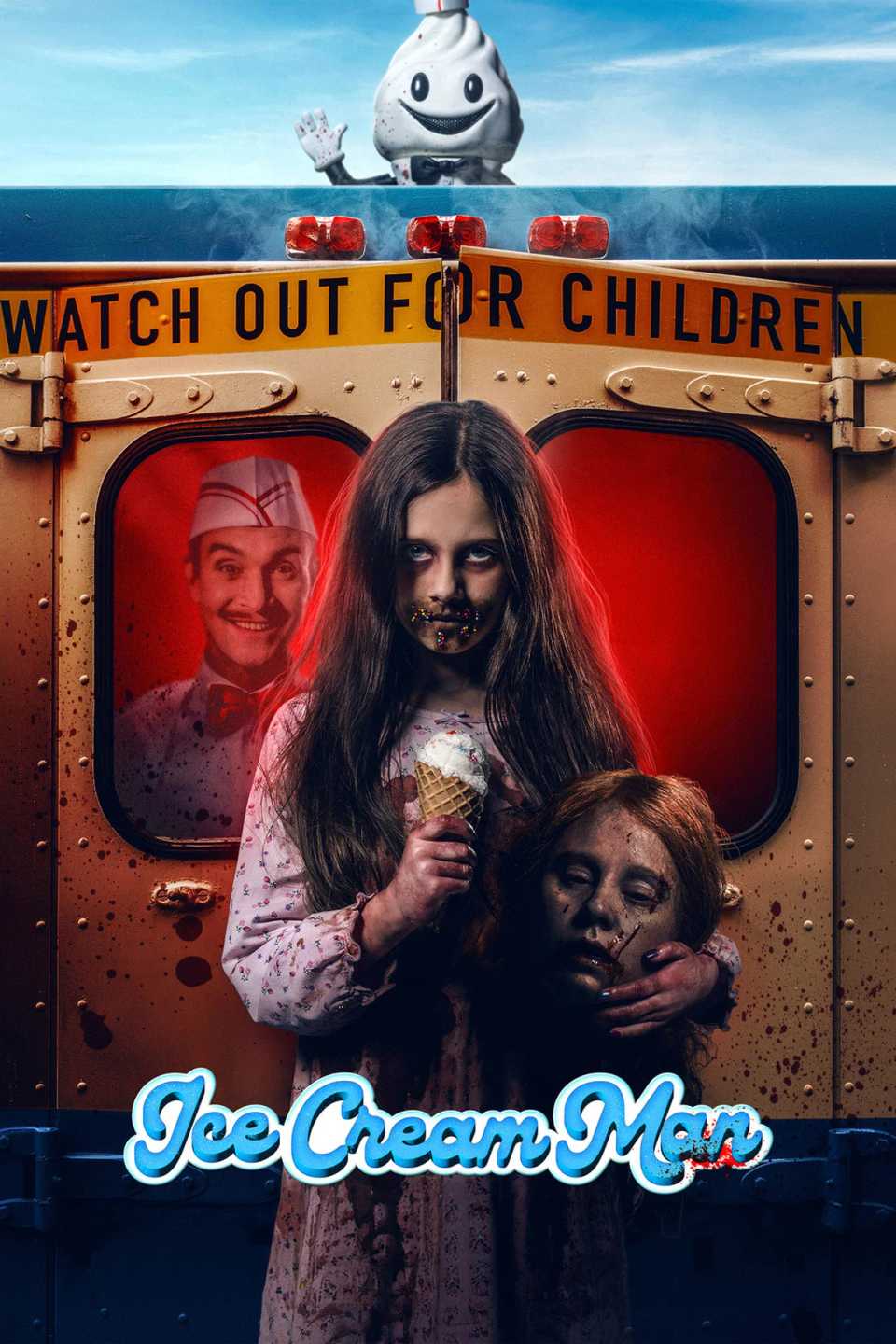
But almost is the operative word. The film mistakes volume for impact, piling on so much splatter that each successive set-piece registers with diminishing returns. By the halfway point, the relentless procession of practical gore effects stops generating tension and starts functioning as filler.
The score does little to compensate, offering generic stings and droning synths that announce every scare rather than earning one.
The Tonal Identity Crisis
Where Ice Cream Man truly stumbles is in its refusal to decide what it wants to be. One scene plays as pitch-black comedy, with children dispatching parents using household objects in ways that land as darkly funny.
The next swings toward earnest body horror, with practical effects so overwrought they sap any remaining levity.
Roth’s self-aware campiness is genuinely endearing in small doses, but the film can’t modulate between sincerity and satire with any consistency. This tonal drift mirrors a deeper philosophical hollowness at the film’s core.
Derivative to Its Core
The homages are so thick they practically smother the film. Beats from Children of the Corn, Waxwork, and a dozen other genre touchstones appear without any apparent awareness that the audience might recognize them.
A film can wear its influences proudly, but this one wears them like a costume, offering the silhouette of nostalgia without any of the period’s scrappy resourcefulness or accidental invention.
Low-budget horror has a long tradition of making poverty look like poetry here, the production values simply look poor. The cinematography is flat, the pacing lurches, and the editing relies on abrupt shock cuts that feel mechanical rather than earned.
What Melts in the End
But films don’t get to pick their audience, and Ice Cream Man never gives mainstream viewers enough reason to tolerate its deficiencies. The one-joke premise runs out of fuel long before the credits roll, the characters remain stubbornly inert, and the filmmaking craft never rises above competent amateurism.
Roth’s provocation feels less like a statement than a crutch.
Ice Cream Man wants to be remembered as a love letter to VHS-era horror, but it forgets that those films, at their best, earned their shocks through craft, character, and an understanding that transgression means nothing without something genuine to violate.
What remains is a film that’s hard to recommend, easy to forget, and best appreciated by viewers with extremely specific tastes and very low expectations.